Have you noticed this?
Many people don’t feel pain when they’re busiest.
They feel it when they finally sit down, slow down, and stop.
The lower back tightens.
The shoulders creep up.
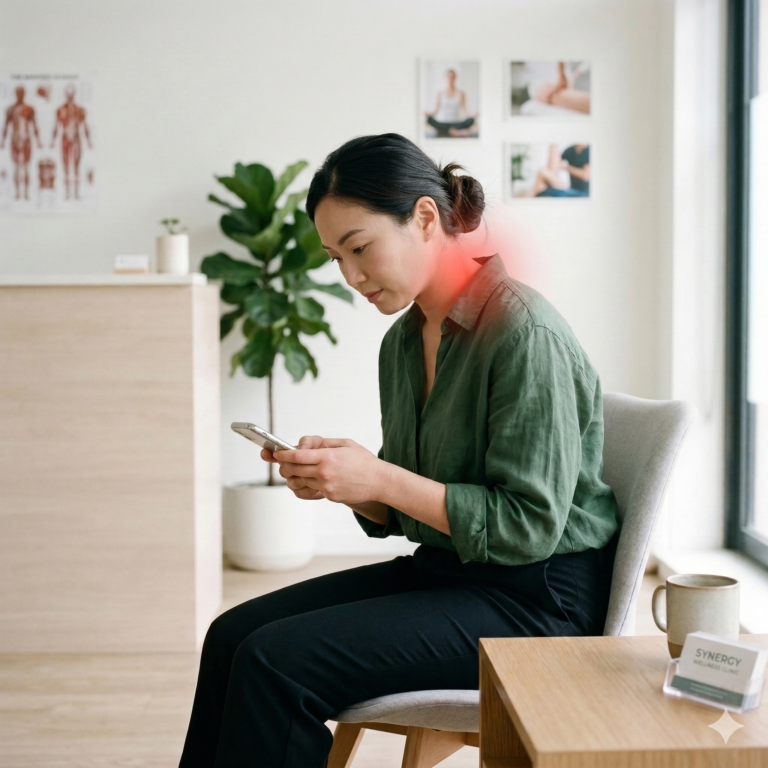
The neck feels stuck.
You might wonder:
Is this aging? Bad posture? Something going wrong?
But from a spinal and joint perspective,
many of these issues aren’t breakdowns — they’re signs of reduced movement.
Joints exist for a simple reason
A principle often mentioned in movement science is:
Joints are designed for movement.
When joints move well:
Joint fluid circulates
Blood flow improves
Muscles don’t need to constantly brace
The body uses less tension to stay stable.
But when movement is limited —
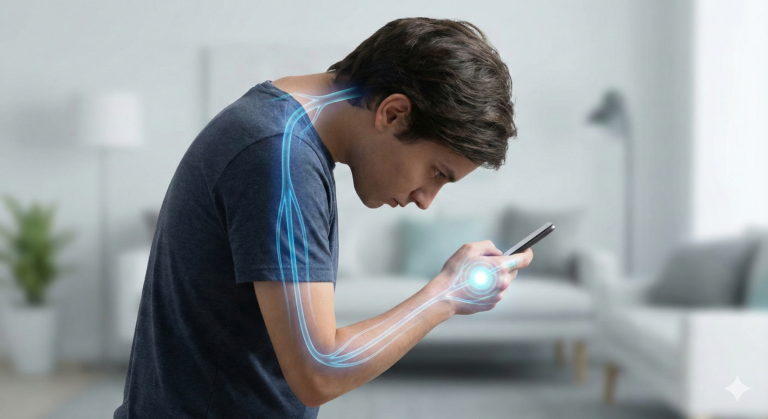
long hours of sitting, commuting, screens, and stillness —
the body adapts.
What happens when joints don’t move?
The body compensates.
Without movement, it creates stability through muscle tension.
This works temporarily.
Over time, that tension becomes the norm —
leading to stiffness, fatigue, and persistent discomfort.
That’s why:
Stretching helps briefly
Rest doesn’t fully restore
The body feels tired even without heavy activity
Why “holding yourself straight” often backfires
Many people try to “fix” their pain by forcing themselves into a rigid, upright posture. But the human body isn’t a statue. It’s a dynamic system meant to breathe and respond to gravity.
Healthy posture isn’t forced—it’s adaptable. At Movement Chiropractic, we don’t just look for what is “out of alignment.” We ask a deeper question: Where has the movement stopped?
A Different Way to Move Into 2026
Our goal isn’t just to “crack” a joint back into place. It’s to restore the flow of the nervous system and the mobility of the spine so your body stops needing to protect itself with tension.
Instead of pushing your body harder, ask it something gentler:
Do I still move with ease?
If the answer is no, you don’t need to be “fixed.” You simply need to rediscover the movement you were designed for.
A gentle invitation
If your body feels tight, guarded, or slow to recover,
it may not need to be “fixed.”
It may simply need help rediscovering how to move naturally.